Built to outlast the equipment they identify – 20+ years outdoors
Tired of These Problems?
×
×
×
×
The Solution? High-Quality Pipe Identification Tags from Metal Marker Mfg.
Pipe identification tags and valve tags are easily overlooked but essential to maintaining a safe working environment. They’re often used to identify piping systems that transport materials such as fuel, oils, water supplies and other fluids from one location to another.
Pipe ID tags need to be able to take everything your operations can dish out, whether it’s extreme heat, chemical exposure, or the brunt of the elements.
At Metal Marker Mfg., we supply premium pipe marking tags in metals like anodized aluminum, stainless steel, and brass, using precise manufacturing methods like embossing and photo anodizing, along with custom polyvinyl when called for.
Our metal pipe tags take the guesswork out of compliance – you get clear, legible tags employees and inspectors can read easily.
The Importance of Pipe Marking Tags
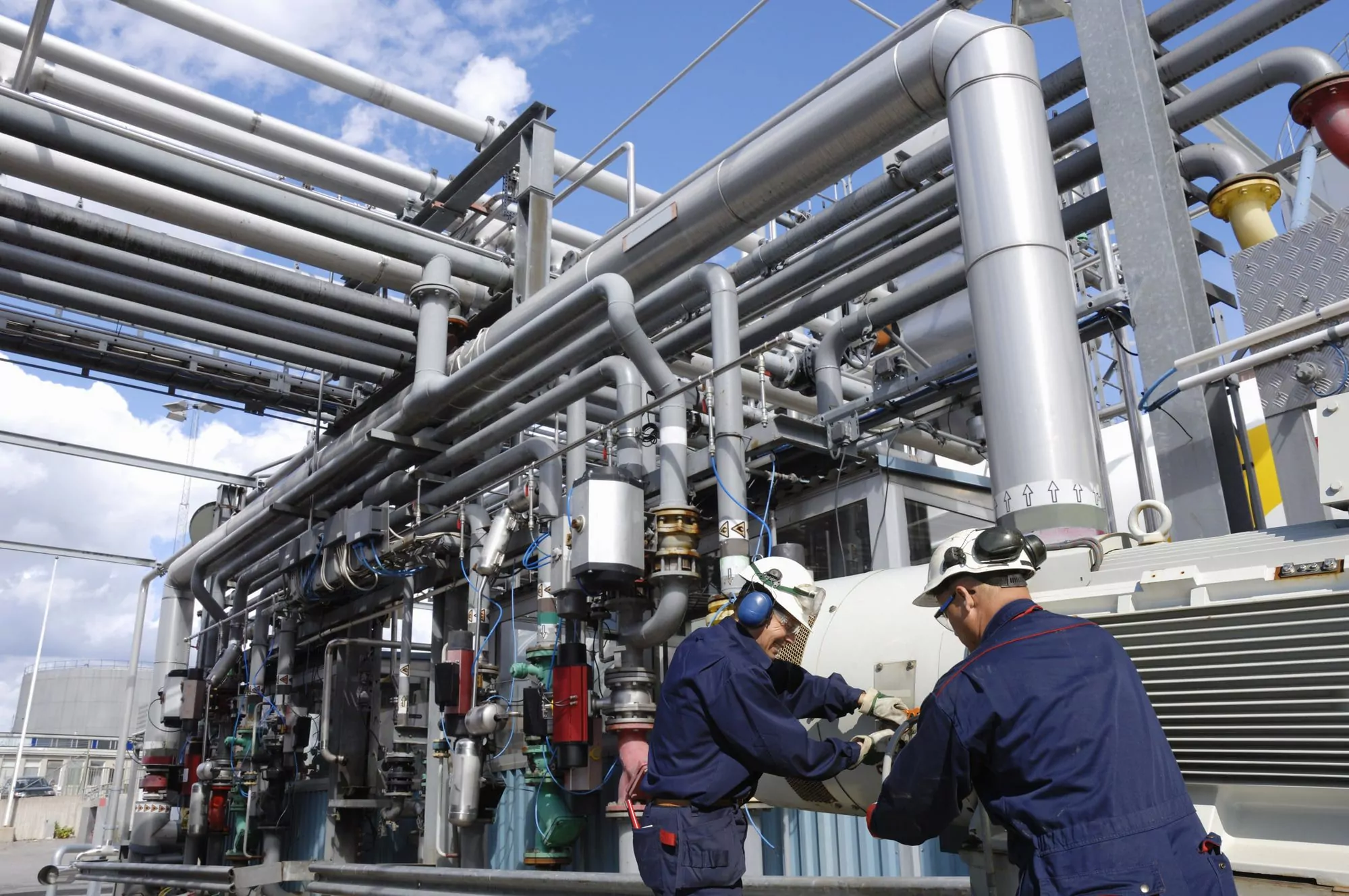
When it comes to pipe identification tags, durability, strength, and visibility are essential. They must be durable enough to withstand heat, chemicals, weather, and other factors that could destroy them. They also need to be clearly visible in case of an emergency, able to communicate important information on internal pressure, temperature, and the presence of hazardous substances.
Plus, OSHA and other regulatory entities maintain strict guidelines for pipe marking, stipulating that markings must be easily legible with bold black text or white text against a color-coded background.
The bottom line: Clear and visible pipe labeling reduces the chances of dangerous workplace accidents, keeps employees safe, and ensures operations meet compliance requirements.
Following OSHA Compliance and Industry Labeling Standards
While OSHA did not create its own standards for pipe marking, it references standards from ANSI/ASME A13.1, the most widely recognized pipe identification standard in the U.S.
This standard uses six predefined colors and four user-defined colors to identify pipe contents and flow direction, and also identifies hazards that could risk health and safety. This color coding also ensures that, in case of an emergency, operators can easily identify the exact contents of a pipe and the specific hazards they’re facing.
| Background Color | Text Color | Pipe Contents |
|---|---|---|
| Red | White text | Fire-quenching substances |
| Orange | Black text | Toxic/corrosive materials |
| Yellow | Black text | Flammable/oxidizing fluids |
| Brown | White text | Combustible fluids/gasses |
| Green | White text | Water |
| Blue | White text | Compressed air |
| Purple | White text | User-defined |
In addition, there are specific size guidelines based on the diameter of the pipe. For example: an 8–10” pipe requires a 24” colorway and characters that are 2 1/2”.
Other relevant standards to be aware of include:
- IIAR Bulletin 114 – This standardizes identification for ammonia refrigeration piping systems
- ISO 14726 – This governs how labels should be applied to onshore and offshore marine pipes
- British Standard (BS) 1710 – This standard specifies how pipe identification tags should be designed and placed in the United Kingdom
- Indian Standard (IS) 2379 – This standard specifies how pipe ID tags should be designed and placed in India
Pipe Marking Tag Best Practices
- Mark all critical junctions – Pipe markings should be placed adjacent to all valves, flanges, and changes in direction
- Indicate flow direction – Pipe markings should communicate changes in direction of flow
- Maintain visibility on long runs – Pipe markings should be placed in intervals of 25 to 50 feet on straight runs
- Mark wall and floor penetrations – Pipes must be marked on both sides of floor or wall penetrations
- Ensure normal-approach visibility – Pipe marking standards indicate that pipe markings should be easily visible to employees from any point of normal approach
Pipe ID Tags Manufacturing Methods
- Labels – As pipes are cylindrical by nature, a flat attachment is not always possible, so many industries have turned to custom labels. These labels are affixed around the pipe using heavy-duty adhesive. They can be produced with full-color designs, allowing for vibrant and easy to view identification, even in dimly lit environments. Typical labels feature white or black text on a solid color background, often with arrows offering a clear indication of which direction the pipe flows.
- Embossing – Embossed tags are produced using a die set, which creates a raised design. This type of marking is incredibly durable, and tough enough to handle exposure to water and other chemicals. Since the design is raised, if the tag gets painted over or otherwise obscured, it will remain legible. Plus, if the tags are produced from anodized aluminum, they can also be color coded for sorting purposes or to quickly identify the type of liquid flowing through the pipe.
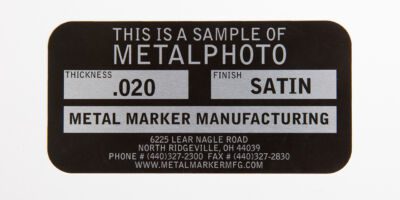
- Photo anodization – The photo anodization process differs from embossing as the design it produces is completely flat to the touch. This unique process embeds information between layers of aluminum for maximum durability (20+ years outdoors). Photo anodized pipe tags can be produced with any design, text, barcode, or logo, and color coding is possible as well since the material is an anodized aluminum.
Why We’re Your Source for Pipe Tags
Metal Marker Manufacturing has over 100 years of experience, having been in business since 1923. During our decades of operation, we have perfected our services, allowing us to provide:
Contact Us for Pipe Identification Tags
Don’t put your employees, equipment, and compliance at risk with outdated, fading pipe tags well past the point of legibility. Keep everything safe and functional with new custom metal pipe ID tags that will hold up in harsh conditions.
Contact our team today to discuss applications and get a free quote.