Custom UID and IUID Labels for Government and Military Compliance
Metal Marker Manufacturing produces UID (Unique Identification) and IUID (Item Unique Identification) labels that meet strict Department of Defense (DoD) standards, ensuring each government or military asset is traceable, verifiable, and compliant for reliable military asset identification. These durable metal barcode tags contain a Unique Item Identifier (UII), providing essential data for asset tracking, lifecycle management, and accountability.
Our UID tags are made from photo-anodized aluminum, offering lightweight strength and long-lasting readability even under extreme military or industrial conditions. Every tag is designed to meet MIL-STD-130N and other relevant specifications, making them ideal for use on sensitive defense equipment, aerospace components, and other government assets.
Each UID label is custom-manufactured to your requirements, from data format and size to barcode style and serialization. Using advanced photo anodization, we embed your information beneath the metal surface, ensuring resistance to wear, corrosion, and UV exposure for decades.
With nearly a century of experience, Metal Marker Mfg. is a trusted U.S.-based manufacturer registered with the Directorate of Defense Trade Controls (DDTC) under ITAR regulations. Our ISO 9001-certified quality management system guarantees precision, quality, and on-time delivery for every order.
Request a Free Product Sample Kit
Before you commit to a contract-critical order, you should hold the tag in your hand.
Our free product sample kit lets you test the durability, scan readability, and finish of our photo-anodized IUID labels against the exact conditions your assets face. For DoD contractors and government asset managers, a sample is the fastest way to confirm a tag will survive the field and pass MIL-STD-130 verification before a single unit ships. Request your kit today and evaluate MIL-STD-130-compliant UID tags firsthand.
Why Choose Metal Marker Manufacturing
Metal Marker Manufacturing produces UID labels and UID tags ensured to meet your requirements. Unique Identification (UID) and Item Unique Identification (IUID) are systems set in place by the Department of Defense to track and monitor government assets and standardize military asset identification.
A metal barcode tag with unique information embedded is attached to the asset to provide critical information to decision-makers. Our customer service representatives will help you get the perfect UID marking solution.
They are ready to handle all of your questions and concerns to get you metal UID tags designed to meet MIL-STD-130N, and any additional specifications you provide.
- Easy ordering
- Award-winning quality and delivery (award from a Fortune 500 Company)
- Manufactured using an ISO 9001-certified quality management system
- Easy ordering and fast delivery
- Made in the USA since 1923
- Registered with the Directorate of Defense Trade Controls (DDTC) as required by the International Traffic in Arms Regulations (ITAR)
Get a Free Quote Today
Call us at 1-866-405-312 or fill out our online contact form to request a free quote for your UID or IUID labels. Our knowledgeable customer service team will guide you through design, compliance, and customization to ensure your tags meet DoD and industry requirements.
What Are UID and IUID Labels?
UID, also known as IUID, is a compliance process in place to enable the traceability of assets established by the Department of Defense. The system serves to create a truly unique identification code for each asset, which separates it from any other in the world.
As a result, there are no duplicates or repeats. Every individual item gets its own code. As long as the correct procedures are followed, it ensures the accuracy and reliability of information.
The DoD uses the IUID registry system to track information such as asset value, location, quantity, and condition. This also allows decision-makers to track changes, monitor programs, and clean up any inefficiencies or issues that may arise.





The Difference Between UID, IUID, and UII
It can be difficult to make sense of all the acronyms involved with UID. The term UID is used in several ways. It most commonly refers to the marking label or tag on the asset. This is also referred to as UID Code, UID Label, or UID Tag.
It is trending toward being replaced by the term IUID – item unique identification – which is better at conveying the focus on item-specific identification.
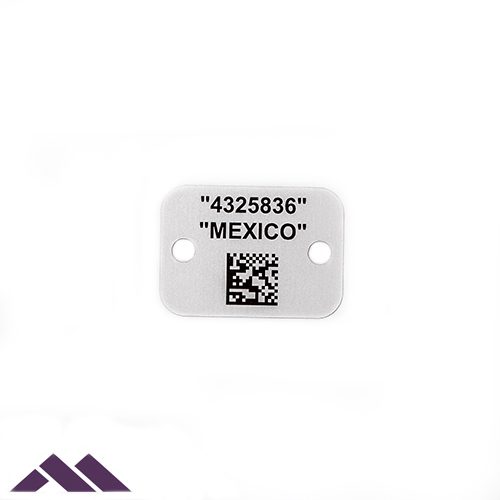
The IUID tags utilize a 2D barcode which is scanned. UII is the information that is embedded within the barcode. When the code is scanned, this information is accessible in a specialized tracking software.
- UID – Unique Identification
- IUID – Item Unique Identification
- UII – Unique Item Identifier
What Is MIL-STD-130?
MIL-STD-130 is the Department of Defense standard that governs how military property is marked for identification. It defines the content, format, and quality of the identification mark applied to items delivered to or owned by the DoD. When a contract calls for Item Unique Identification, MIL-STD-130 is the specification that tells you exactly what the mark must contain and how durable it must be.
The standard is central to military asset identification because it creates one consistent marking method across every branch, program, and supplier. That consistency is what allows a single scan to return accurate, trusted data on any tagged item, anywhere in the Department of Defense supply chain.
The current revision, MIL-STD-130N, requires both a machine-readable two-dimensional Data Matrix symbol and human-readable information on the same mark. Metal Marker produces IUID labels engineered to meet MIL-STD-130N so your submissions are accepted the first time.
These MIL-STD-130 labels encode a UII in a Data Matrix format that meets Department of Defense marking requirements.
What Makes a Mark MIL-STD-130 Compliant?
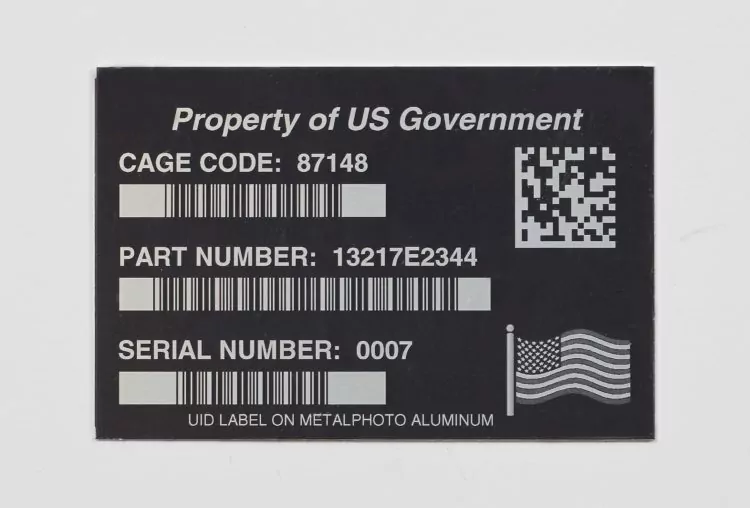
A compliant mark is more than a barcode. Under MIL-STD-130, each UID tag carries a set of data elements that together build a Unique Item Identifier, or UII, that no other item in the world shares. A MIL-STD-130-compliant mark generally includes:
- A machine-readable Data Matrix ECC 200 symbol that encodes the UII
- Human-readable text that mirrors the encoded data
- The manufacturer or enterprise identifier, most often the CAGE code
- The original part number, when required by the construct used
- The item serial number
The Data Matrix symbol is what field personnel scan, while the human-readable line provides a backup that a person can read and enter by hand if needed. Metal Marker Mfg. includes both on every UID tag so they remain usable even in degraded conditions.
UII Construct 1 vs. Construct 2
The DoD allows two accepted methods for building a UII, referred to as Construct 1 and Construct 2. The right choice depends on how your organization assigns serial numbers.
- Construct 1 is used when a serial number is unique across your entire enterprise. It combines the issuing agency code, your CAGE or enterprise identifier, and the serial number.
- Construct 2 is used when a serial number is only unique within a specific part number. It combines the issuing agency code, your CAGE or enterprise identifier, the original part number, and the serial number.
Both constructs produce a permanent, globally unique identifier. Our team will help you determine which construct fits your numbering system so your IUID labels register correctly the first time.
The IUID Registry
Every UII is recorded in the IUID Registry, the Department of Defense master database for uniquely identified items. The registry stores acquisition, valuation, and lifecycle data for each item and follows that item from delivery through disposal.
When your mark is scanned, the UII links directly to that item record. This is how the DoD tracks value, location, quantity, and condition across millions of assets without duplication or guesswork. A correctly built and verified mark is what keeps your items registered and your contract in good standing.
What Materials Do We Use for UID Labels and Tags?
With durability at the forefront of our UID solutions, anodized aluminum is the most common material choice. It provides an incredibly durable base and can be adorned with any customized information. Aluminum is extremely light, so your UID tags will not add significant bulk or weight to the equipment.
UID Tag Durability
Durability is a major concern for government-type applications – military use especially. These organizations often expose their equipment to some of the harshest conditions. The accompanying identification solutions which they use must be equally durable.
Processes which use surface-level printing will not be sufficient. The topical ink will simply wear or fade from UV exposure.
At Metal Marker Manufacturing, we produce IUID tags with the highly durable photo anodization process and guaranteed to last throughout the machine’s lifecycle.
What Processes Do We Use to Customize UID Labels and Tags?
We use photo anodization to produce durable UID tags. This unique process embeds a custom design beneath a protective layer of aluminum for outstanding resistance to wear and corrosion.
The increased durability means these labels will last 20+ years outdoors in the harshest environments. Through the photo anodization process, our UID labels retain easy readability and function. Depending on the typical lifecycle of a machine, these labels and act as a permanent identification tag.
Photo anodized tags are often associated with the UID system as they can include various types of barcodes.
Our UID nameplates can include various barcode types including:
- Data Matrix codes
- QR codes
- Linear barcodes
In addition to barcodes, any human-readable information can be included in the design. Logos, serial numbers, and more can be incorporated.
MIL-STD-130 Mark Verification and Quality
A mark is only compliant if it can be read reliably for the life of the asset. MIL-STD-130 references established quality standards for the Data Matrix symbol, and a mark that grades poorly can be rejected even when the data is correct.
Metal Marker Mfg. produces IUID labels using photo anodization, a process that seals the image beneath the surface of the aluminum, providing decades of readability. On request, we can supply verification documentation for your UID tags so you have proof of quality on file for audits and contract deliverables. That level of assurance is what separates a compliant supplier from a risky one.
How Are UID Labels and UID Tags Used?
Traceability is vital for government operations. The Department of Defense (DOD) maintains detailed records of every tool, machine, and part number that they used.
The Department of Defense requires UID Tracking codes for assets that meet the following criteria:
- Acquisition cost for a unit greater than $5,000
- Serially managed items
- Controlled inventory
- Mission essential assets
These specifications are provided in greater depth within MIL-STD-130.
We are very familiar with these guidelines and will work with you to ensure your identification tags adhere to the standard.
UID System
The function of the UID system is to create a truly unique identification code for each asset. There are no duplicate or repeat codes. This allows for full accountability of military and government assets. Uses for IUID tags include:
Uses for IUID tags include:
- Theft prevention
- Asset tracking
- Inventory management
- Accountability
- Many more!
By marking equipment with a scannable code, access to information becomes incredibly streamlined. This provides the framework for a wide range of potential applications.
Where DoD Asset Tags Are Used
MIL-STD-130 marking reaches far beyond a single type of equipment. Any supplier delivering qualifying items under a Department of Defense contract may be required to apply UID tags, and the same standard is used across all branches of the armed forces. Common applications for DoD asset tags include:
- Aerospace and aircraft components
- Ground vehicles and support equipment
- Weapon systems and controlled inventory
- Communications and electronics hardware
- Test, measurement, and calibration equipment
- Spare and repair parts held in the supply chain
If your organization holds a defense contract, military asset identification is not optional. Metal Marker Mfg. helps primes and subcontractors alike apply the correct mark to every qualifying item.
Attachment and Application Methods
A MIL-STD-130 mark is only as good as its bond to the asset. The right attachment method depends on the surface, the environment, and the expected service life of the item. Our team supports several proven attachment options for UID tags, including:
- Pressure-sensitive adhesive for clean, flat surfaces
- Mechanical fasteners such as rivets or screws for high-vibration applications
- Welding or epoxy for permanent placement on rugged equipment
Our team will recommend the attachment method that keeps your IUID labels firmly in place and fully scannable throughout the item lifecycle.
Department of Defense (DoD) Regulations
If you’re thinking UID codes are an optional choice, you’d be mistaken. Military UID labels are required by the Department of Defense. This not only includes internal government organizations, but also contractors. Generally, if you have a government contract to produce equipment for the military, you better make sure it is labeled correctly to IUID specifications, including aspects like the CAGE code, part number, and serial number.
Accordingly, if your organization does not follow the UID requirements, it is possible your order will be denied, returned, or even unpaid. (Not news you want to find out about your government contract.)
STANAG 2290 and NATO Asset Marking
The United States military isn’t the only organization that relies on unique item marking. NATO uses STANAG 2290 to define how member nations construct and apply a UII, which keeps identification consistent across allied supply chains.
For suppliers working on coalition or foreign military sales programs, marking to the correct standard matters just as much as it does for domestic contracts. Metal Marker Mfg. can produce IUID labels that align with both MIL-STD-130 and NATO marking requirements so your items are recognized wherever they are deployed.
FAQs About UID and IUID Labels
Are UID and IUID labels the same thing?
Yes, they describe the same system. UID is the original term, and IUID, standing for Item Unique Identification, is the more current name that emphasizes item-level marking. In practice, UID tags and IUID labels refer to the same MIL-STD-130 compliant marks.
Who is required to use MIL-STD-130 marking?
Any contractor delivering qualifying items to the Department of Defense may be required to mark them. This generally applies to items with a unit acquisition cost of $5,000 or more, along with serially managed, mission essential, and controlled inventory items regardless of cost.
What is a UII?
A UII, or Unique Item Identifier, is the permanent code encoded in the mark. It is built from data elements such as your CAGE code, part number, and serial number. No two items share the same UII.
How long do your UID tags last?
Our photo-anodized UID tags are built to remain readable for more than twenty years, even in harsh outdoor and military environments, because the image is sealed beneath the surface of the aluminum.
Can you help us choose the right UII construct?
Yes. Our team reviews how your organization assigns serial numbers and recommends Construct 1 or Construct 2 so your IUID labels register correctly the first time. While we can provide guidance, Metal Marker does not take responsibility for your artwork. Make sure to do additional review to ensure compliance.
Contact Us About a UID Labeling Solution
At Metal Marker Mfg., we create high-quality UID and IUID labels, tags, and nameplates. Our custom ID solutions are perfect for government applications.
Our knowledgeable customer service representatives are waiting to help you find the perfect solution tailored to your needs. They are also ready to answer any questions you may have and get you started on your identification solution.
Fill out our contact form on this page or give us a call at 1-800-428-0095
Related Blogs
The Metal Marker Advantage
Four things set our work apart, and they have for decades.